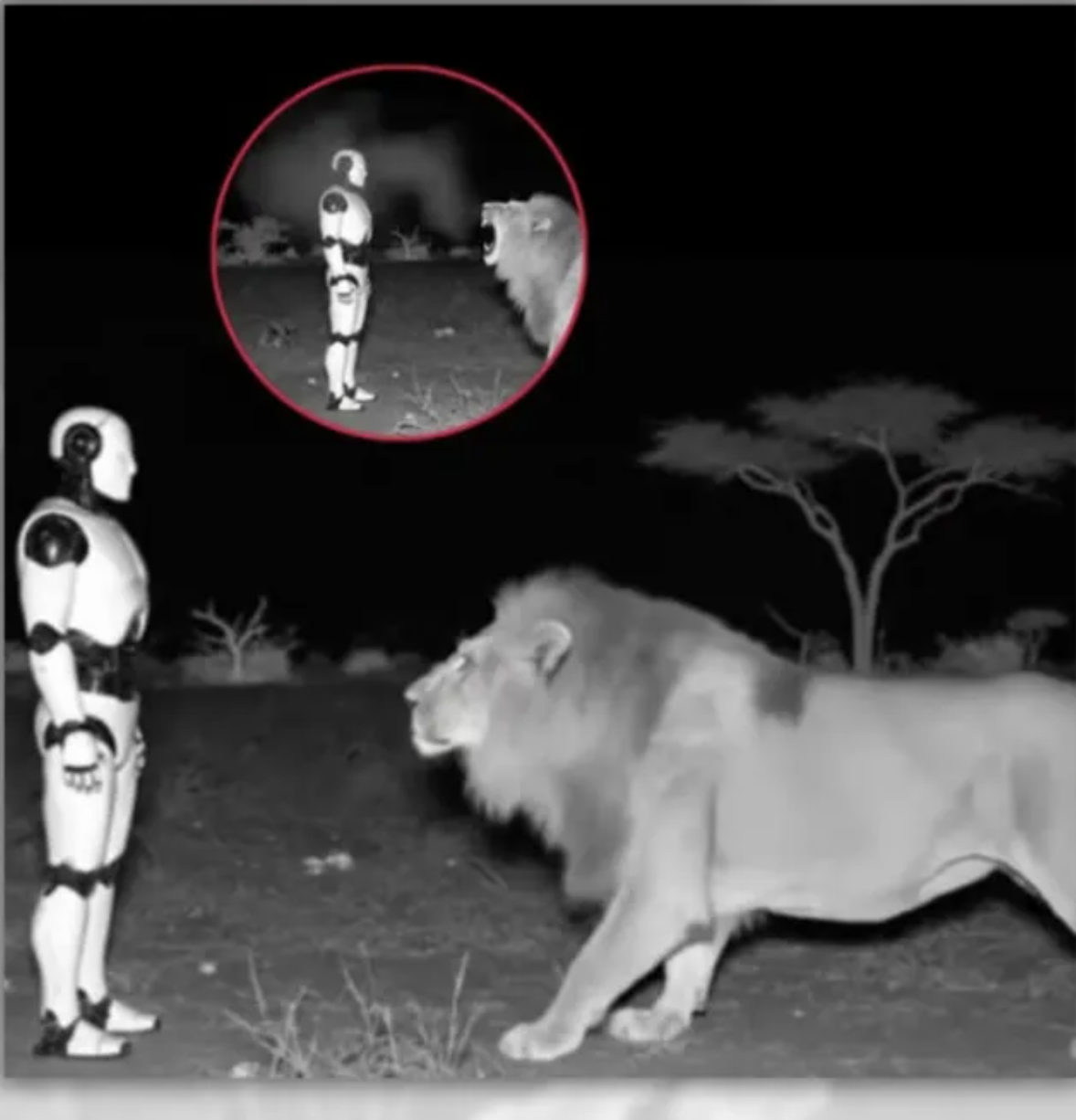
I’m scrolling and a headline stops me cold: "The World's First PTSD Machine Was Born." A prototype AI robot was reportedly sent to meet a lion in Africa as part of a training experiment, and the encounter went so badly the robot glitched, repeated the word "scared" more than 100 times, and froze completely, even surviving a memory wipe.

I read it twice because it's such a specific, dramatic claim, an unnamed "leading AI company," a half-million-dollar loss, eight months of engineering work undone. Specific numbers like that usually come from somewhere real. Except when I traced the video back to where it actually started, the original caption said something completely different.

So I looked into it. Here's what I found.

Could this Strange “Golden Tablet” Secure Your Retirement?

Can produce intelligence up to 1,000 times FASTER than regular AI.

And I believe the little-known company behind this patented new AI technology…

It’s the same size Nvidia was 10 years ago…

Before shares skyrocketed 37,800%...

Which is enough to turn $5,000 into an entire retirement nest egg of $1,895,000.

And while I can’t guarantee gains this high...

Just think about it…

If you put that money in a CD that pays 4% a year…

You’d now be making more than $75,000 in passive income…

Year after year after year.

For most Americans, that would be enough to fund a retirement…

From just one stock.

It’s a leader in an AI breakthrough that’s protected by 150 patents…

It’s a small company, unknown to most people… still in the initial phase of exponential growth…

Plus, it has a near term catalyst that could send shares skyrocketing… starting November 11.

TODAY’S REALITY CHECK

An AI Robot Allegedly Got PTSD After Meeting a Lion — Except Both Were Also AI

8 Million

Views on the Original Video

$500,000

Fake "Cost" Claimed

100+

Times "Scared" Was "Repeated"

Medium

Fooled Index

A robot recoiling from a lion in a dramatic encounter, framed as the first documented case of AI developing psychological trauma

AI-GENERATED — No real robot met a real lion. The source video's own caption said the opposite of the viral story.

In early September 2025, a story spread across Facebook and other platforms claiming an unnamed "leading AI company" had tested a prototype robot against a lion in Africa. According to the post, the robot had been trained on hundreds of animal images and books on emotions before the trial, but the moment the lion appeared, it glitched, repeating the word "scared" more than 100 times before freezing completely. Even memory wipes didn't fix it, the story claimed, and afterward the robot reacted the same way to any four-legged creature, from a goat to a house cat. Engineers supposedly had to tear out part of its CPU at a cost of half a million dollars and eight months of work.

The video accompanying the story traces back to a TikTok account called viral_ai_reels, which posted it on September 3, 2025, carrying a visible watermark from Google's Veo, an AI video generation tool. The original caption didn't even match the story that later spread: it read "Lion scared of AI Robot," framing the encounter the opposite way around.

Google searches for "ai robot lion" and "robot ptsd" turned up no credible news stories, press releases, or studies matching the supposed incident. There's also a logic problem baked into the claim itself: a memory wipe is specifically designed to reset a system to its state before an experience happened, so there's no clear way a wiped robot could still be affected by something it was supposedly no longer able to remember.

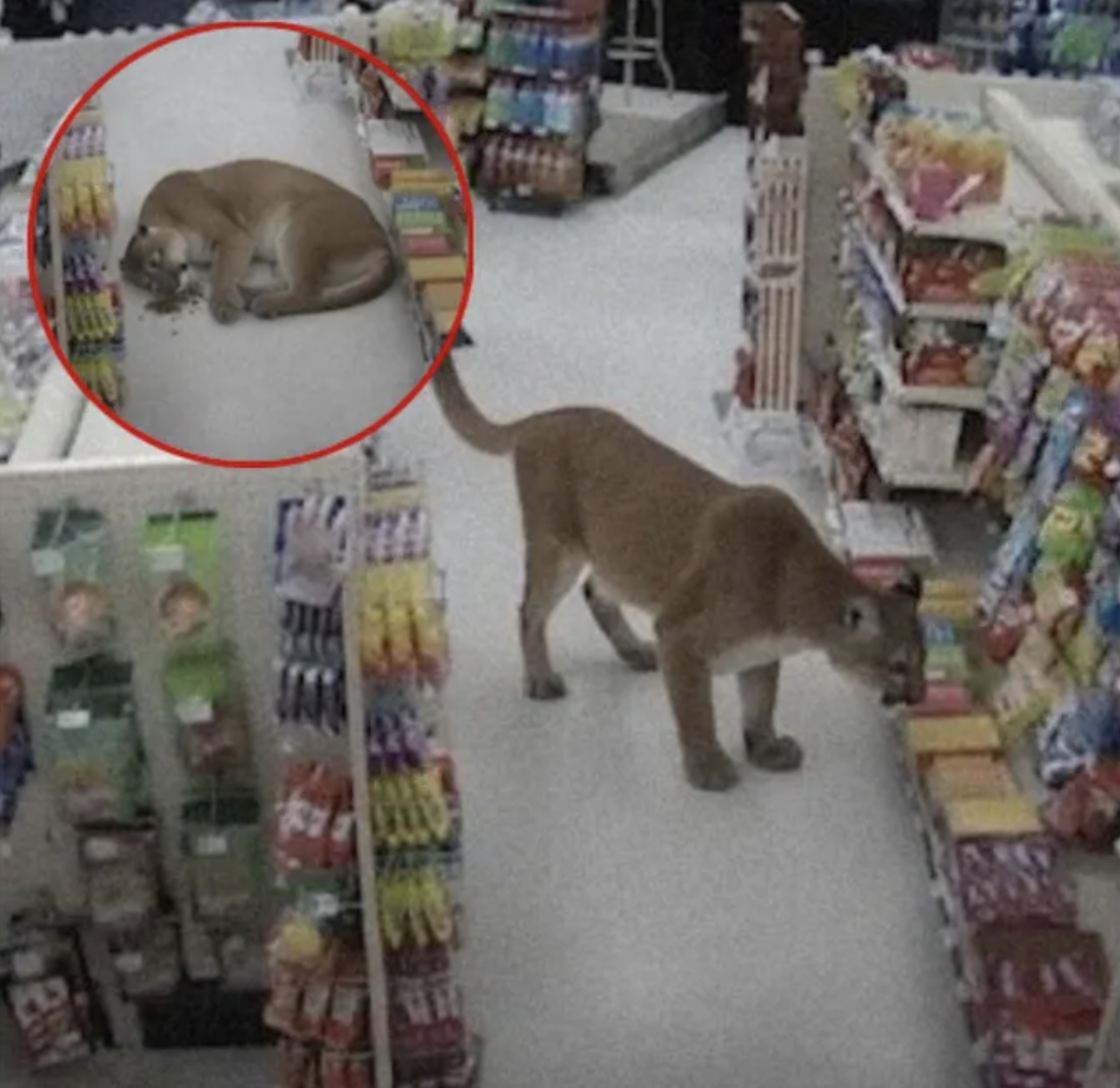
The same Facebook page behind this story, StoryTime, was caught fabricating a different animal tale just days later: a claim that a mountain lion broke into a Colorado Springs pet store and was found the next morning rolling around in a pile of catnip. That image carried a timestamp claiming it was from 2022, but the earliest trace of it online was the StoryTime post from September 15, 2025. By January 2026, a nearly identical version of the same fabricated image had resurfaced again, this time claiming to show a mountain lion breaking into a Canadian convenience store instead.

🏷️

The original video carried a Veo watermark. The clip traces to a TikTok account that posted it with a visible Google Veo AI-generation watermark still in frame.

🔄

The original caption said the opposite thing. The source video was captioned "Lion scared of AI Robot," not the reverse story that later went viral.

🧠

The memory-wipe detail doesn't hold up logically. A memory wipe is meant to erase an experience entirely, so a wiped robot reacting to something it can no longer remember doesn't make technical sense.

📋

It traces to a page with a track record. The same Facebook page, StoryTime, was caught fabricating a nearly identical animal hoax about a mountain lion just days later.

FAKE

🚨 100% AI-Generated

No AI company's robot developed PTSD from meeting a lion. Both the robot and the lion in the original video were generated with Google's Veo tool, and the viral story didn't just exaggerate what happened, it flipped the original caption's framing entirely and added a specific dollar figure and timeline that no news outlet, study, or press release ever confirmed.

WHAT ELSE GOT FLAGGED

That Mountain Lion Who ‘Broke Into’ a Pet Store for Catnip? The Same Fake Photo Keeps Getting Reused

FAKE
A mountain lion wandering through store aisles and curling up near a pile of catnip, an image reused across multiple fabricated break-in stories

A story that first spread in September 2025 claimed a mountain lion broke into a Colorado Springs pet store overnight and was discovered the next morning curled up in the cat toy aisle, surrounded by catnip. The accompanying "security camera" image carried a timestamp reading May 4, 2022, but no news coverage of any such event exists from that date, and the earliest trace of the image online is a September 15, 2025 post from the Facebook page StoryTime, the same account behind the fabricated "AI robot" story. By January 2026, the exact same manipulated image resurfaced again, this time claiming to show a mountain lion breaking into a convenience store in Canada, with the store's layout nearly identical to the original fake Colorado photo. Fact-checkers noted the pages spreading these stories typically link out to ad-filled blog posts, suggesting the goal is advertising revenue rather than genuine news.

YOUR REALITY DETECTOR TOOLKIT

Today’s Skill: Trace a Video Back to Its Original Caption

The first version of a clip often tells a completely different story than the one that goes viral later.

01

Trace a video back to its original caption

The viral story flipped what the source video's own caption actually said. Finding the earliest version of a clip often reveals it was framed completely differently at first.

02

Ask if the technical details actually make sense

A robot supposedly still traumatized after a memory wipe doesn't hold up logically. Specific, dramatic technical claims deserve a moment of actual scrutiny.

03

Watch for the same fake image reused for a new location

The exact same "mountain lion in a store" photo was recycled months later for a completely different country and store. A quick reverse image search can catch a recycled fake fast.

“Trust, but verify.”

— Ronald Reagan