Trump Posts AI Golden Eagle on the White House — and the White House Shares It on Three Platforms
|
|
3 Platforms
Official shares
|
10+ Outlets
News coverage
|
|
~3 hrs
To debunk
|
High
Fooled Index
|
|
|
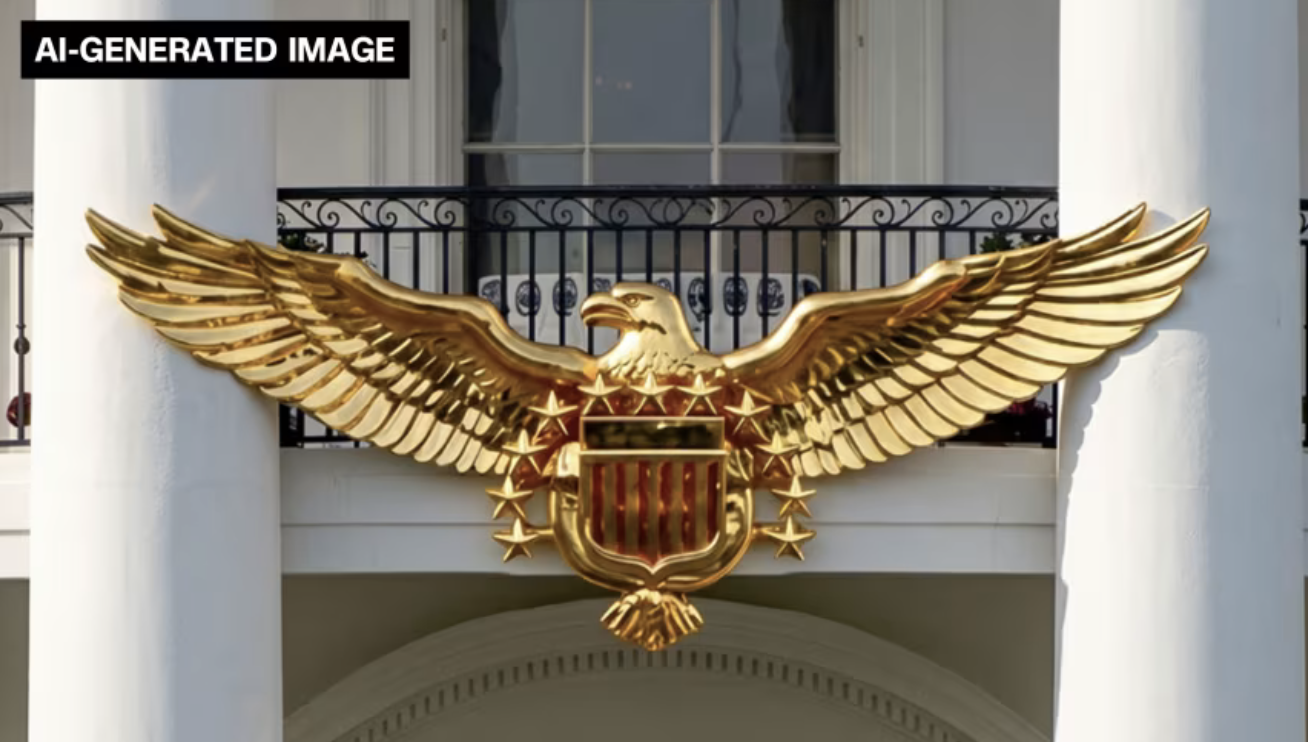
On Monday evening, June 29, President Trump posted an image on Truth Social showing a large golden eagle attached to the Truman Balcony of the White House. He wrote, “A Golden Gift to the White House for its 250th Birthday Year!” alongside it. The eagle’s wings spanned the full length of the balcony, and a red-white-and-blue shield sat on its chest. The official White House accounts then shared the same image on X and on Instagram.
CNN reporter Donald Judd checked the image’s metadata and found content credentials pointing to Google AI. Google’s SynthID detector also picked up a digital watermark in the picture, which means someone used a Google AI tool to make all or part of it. The shield on the eagle had 11 stars instead of the standard 13, and the railing on the balcony didn’t match the real Truman Balcony.
Freelance photographer Andrew Leyden went to the White House at 9:30 that evening — after Trump posted the image — and photographed the balcony. He found no golden eagle. The White House has not said whether the image shows something they plan to build or something they made with AI, but no other photos of the eagle have turned up, and no one from the White House has named a sculptor or manufacturer.
France 24 also pointed out that the White House itself is not 250 years old — construction started in 1792 and workers finished the building in 1800. The country turns 250 on July 4, but the building does not. Online, some supporters called it a “powerful symbol of American strength,” and critics called it “tacky” and “cheap.” The strongest pushback came from people who compared the oversized golden eagle to Nazi-era eagle imagery.
|
|
| 🔍 |
Google SynthID Watermark Google’s SynthID detector found a digital watermark in the image, and the metadata contained content credentials tied to Google AI. Someone used a Google AI tool to make all or part of this picture.
|
|
|
| ⭐ |
11 Stars Instead of 13 The shield on the eagle’s chest had 11 stars. The Great Seal of the United States has 13, one for each original colony. The AI tool got the count wrong.
|
|
|
| 🏛 |
Railings Don’t Match the Real Balcony CNN found small differences between the railing in the image and the actual Truman Balcony, with the spacing and spindle design looking different from the real thing.
|
|
|
| 📸 |
Photographer Went and Checked Freelance photographer Andrew Leyden went to the White House at 9:30 PM the same evening and photographed the balcony. He found an empty balcony with no golden eagle on it.
|
|
|
|
🚨 AI-Generated
Someone used a Google AI tool to create all or part of this image. The metadata confirms it, the SynthID watermark confirms it, and a photographer confirmed the balcony had nothing on it. The President and official White House accounts shared it on three platforms without labeling it as AI-generated.
|
|
|
|
Erling Haaland Gets Scared by His Own Reflection — Except It’s a Face-Swapped Chinese Comedian
|
|

https://beehiiv-images-production.s3.amazonaws.com/uploads/asset/file/70fe567d-b7b3-4ef2-b754-d86b5e3e2405/food.png?t=1782989402
A video showing Norwegian footballer Erling Haaland eating with chopsticks at a cafeteria and getting startled by his own reflection went viral with more than 50 million views across X, Instagram, Facebook, and YouTube. The X account @Crazymoments01 posted the altered version on June 29, and it spread fast during the World Cup. But the original video belongs to Chinese comedian Jin Long, who posted the skit on his TikTok account (@jinlongqiuqiu) on June 15 as part of his comedy series where he plays an absent-minded mechanic. Someone used face-swap software to put Haaland’s face and clothes onto Jin Long’s body, and Lead Stories confirmed the debunk by matching every detail in the two videos — the wall tiles, the food tray, and even the steamed bun in his hand.
|
|
|
Scammers Sell 37,000 Packets of Seeds for AI-Generated Flowers That Don’t Exist on eBay, Amazon, and Etsy
|
|
https://beehiiv-images-production.s3.amazonaws.com/uploads/asset/file/e5fcd5f4-f468-4a34-9735-9713fc6f2e3c/flowers.png?t=1782989603
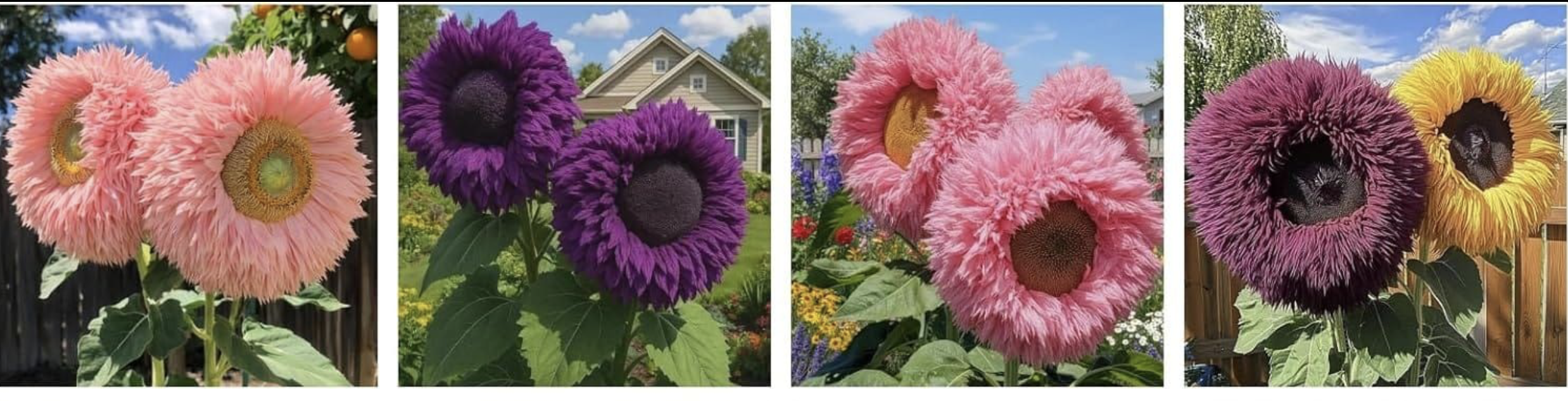
404 Media reported that scammers on eBay, Amazon, and Etsy are selling seeds for plants that have never existed, using AI-generated images of flowers shaped like butterflies, cat heads, and birds to lure buyers. One eBay seller moved 37,271 packets of fake rose seeds before the platform banned them, and Etsy listings include plants that look like screaming shrimp and red-white-blue patriotic shrubs. The scam has run for years, but AI image tools have made it far easier to create fake flower photos, and the major online retailers have not been able to stop the flood of listings.
|
|
YOUR REALITY DETECTOR TOOLKIT |
|
Today’s Skill: When Something Looks Official but Feels Off
Even official accounts can share AI-generated images without labeling them, so knowing a few things to look for can keep you from being fooled.
|
|
01
|
Look for Other Photos of the Same Thing
If something that big appeared at the White House, tourists and news photographers would have photos of it from different angles. In today’s story, only one image of the golden eagle existed — the one Trump posted. When you see a dramatic image and can’t find a single other photo of it, that’s a red flag.
|
|
|
|
02
|
Count the Small Details
The shield in Trump’s image had 11 stars instead of 13. Before you share a photo with a flag, badge, or seal in it, count the stars, stripes, or letters and compare them to the real version.
|
|
|
|
03
|
Check if Anyone Confirmed It in Person
The official White House accounts posted the eagle image, but no reporter or photographer confirmed seeing it on the balcony. Photographer Andrew Leyden walked over and took photos of the empty balcony the same evening. Before you share something like this, check whether any news outlet has confirmed it with their own eyes.
|
|
|
|
|