That Video of Two AIs Interviewing Each Other for a Job? It’s a Staged Parody, but AI Interviews Are Real
|
|
63%
Job Seekers Interviewed by AI
|
$60,000
Salary the AI Offered to Accept
|
|
Oct. 12
Date the Video Was Posted
|
Medium
Fooled Index
|
|
|
|
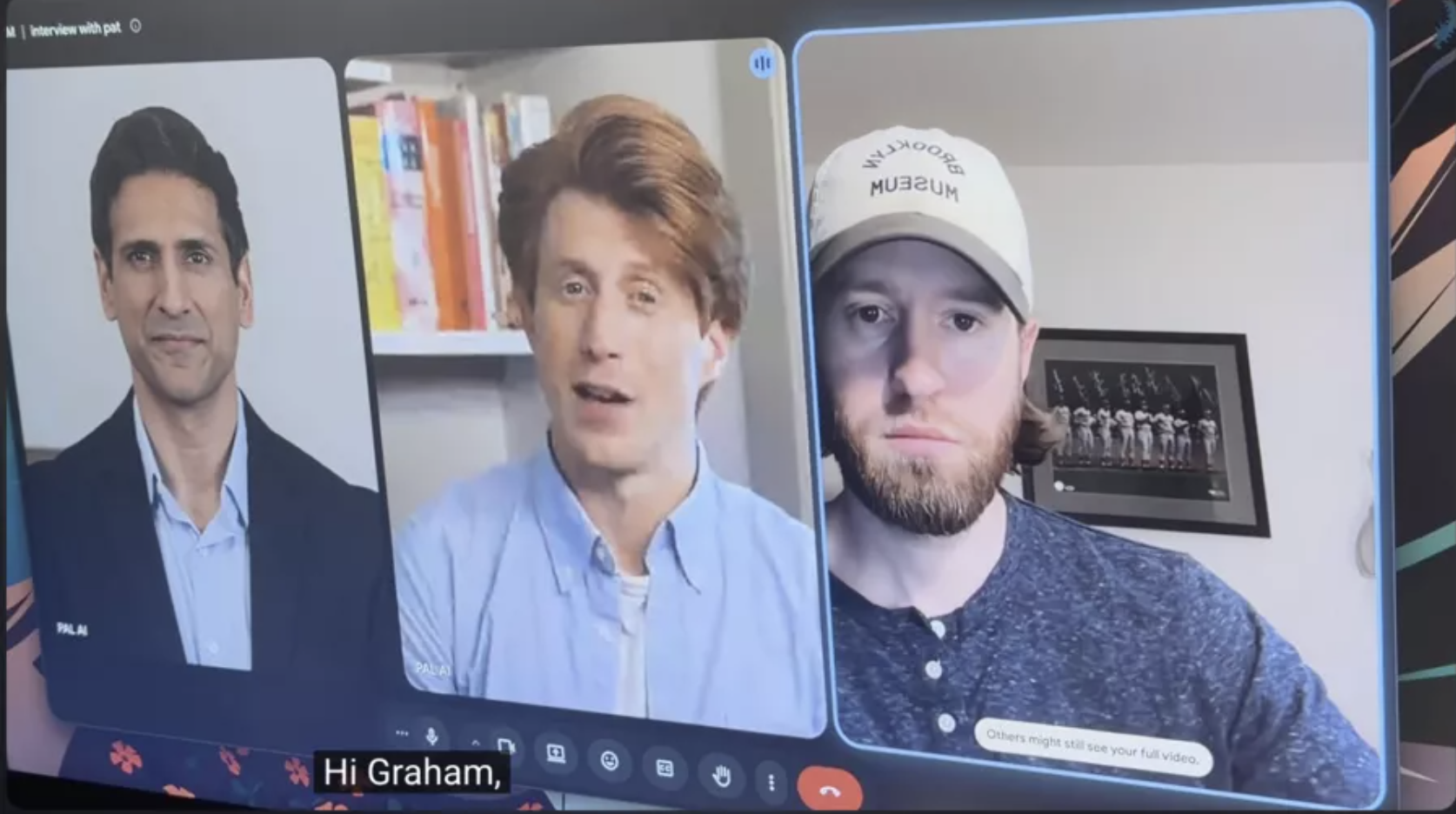
STAGED PARODY — A comedy video that spread as if it were a real interview.
|
|
On Oct. 12, 2026, the YouTube channel Graham Dot Zip posted a video titled “I Sent an AI to My Job Interview. So Did the Company.” The caption says the company sent an AI recruiter to interview the creator, so he sent an AI to represent him, then sat in the meeting and watched the two discuss his career. In the video, Graham introduces his AI assistant, Victor, as his representative. Victor overstates Graham’s work experience and suggests Graham would accept a $60,000 annual salary, which Graham objects to as too low. The conversation then drifts into an endless series of goodbyes until Graham steps in.
The clip was copied and reposted across social media as if it were real. It isn’t. The creator confirmed to Lead Stories on Oct. 16 that his content is parody and that he is not taking part in real interviews. He said the conversations are improvised and the AI’s responses are real, so the videos are “staged, but not scripted.”
The idea behind the joke is real, though. Companies increasingly use AI agents to screen job applicants. A survey by the hiring platform Greenhouse found that 63% of 2,950 job candidates said they had been interviewed by an AI agent, and its report headline adds that most haven’t had a good experience yet.
|
|
| 🎭 |
The creator says it’s parody. He told Lead Stories by email that he is not taking part in real interviews.
|
|
|
| 🎬 |
It’s staged but not scripted. The conversations are improvised and the AI’s replies are real, which is why the scene feels authentic.
|
|
|
| 📺 |
It started as comedy on a channel. The first post was a titled video on the Graham Dot Zip YouTube channel, not a news report.
|
|
|
| 🔁 |
The reposts dropped the context. Copies spread on other platforms as if they showed a real interview.
|
|
|
|
🚨 Staged Parody, Real Trend
Nobody was really interviewed by two AIs. The video is a staged comedy bit, though the AI replies in it were real and unscripted. AI interviewers themselves are real: 63% of the job candidates in one survey said they had faced one.
|
|
|
|
Those Viral ‘Sleeping Pods for the Homeless in Germany’ Pictures? Many Are AI, and the Real Projects Look Different
|
|

On Oct. 15, Lead Stories warned about viral images of small one-person sleeping pods for homeless people, usually credited to Germany. Many were made with AI, and the captions are vague: they rarely give an address or name the group running the program. The detectors Hive Moderation and Sightengine rated such pictures close to 100% likely to be AI-generated, and some details make little sense, such as a sleeping surface too short for an adult, or a pod with the lights on and the privacy blind left open. Real pod programs do exist. The BBC reported on one in Ulm, Germany, in 2021 and another in Bradford, England, in 2025, and Portland Monthly covered one in Oregon in 2019, but they looked different from the viral pictures. Some accounts post dozens of “sleeping pod” videos, and Lead Stories noted one that appears tied to an apparel and printing business. The need is real, Lead Stories says, but the topic has been taken over by AI creators chasing engagement.
|
|
YOUR REALITY DETECTOR TOOLKIT |
|
Today’s Skill: Look for the Missing Specifics and the Original Source
A believable story usually names who, where, and who made it.
|
|
01
|
Look for names, addresses, and organizations
The sleeping-pod captions named a country but gave no address and no group. A real program usually says who runs it and where it is.
|
|
|
|
02
|
Find where the clip first appeared
The “job interview” started as a comedy video on a YouTube channel before others reposted it as real. Many viral clips began as jokes, and the original post often says so.
|
|
|
|
03
|
Check one file at a time with an AI checker
In July, Lead Stories found that Gemini’s watermark checker repeated its first answer for later files in the same chat, and advised starting a fresh chat for each item. Treat any single checker’s answer as a clue, not a verdict.
|
|
|
|
|


