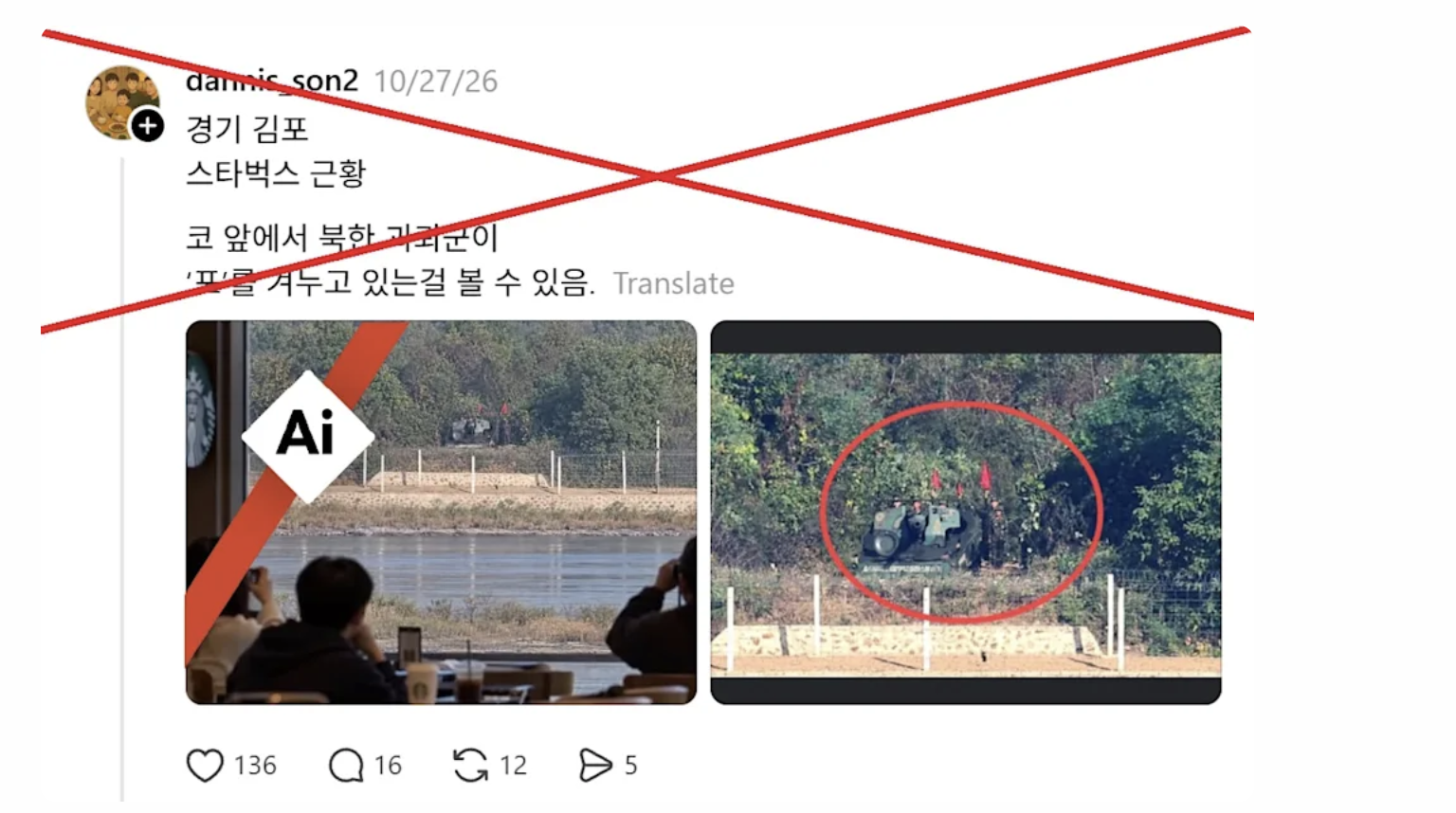
A North Korean Howitzer Aimed at a Starbucks — Made by Someone With an OpenAI Account
|
|
Millions
Views across platforms
|
5+ languages
Spread on Threads, X, Facebook
|
|
~10 days
To debunk (AFP, Nov 5)
|
High
Fooled Index
|
|
|
On October 26, someone posted a photo on X that looked like it came from the Starbucks at Aegibong Peace Ecopark in Gimpo, South Korea — the closest Starbucks to North Korea. The next day, the same image appeared on Threads. It showed customers inside the cafe looking through a window at North Korean soldiers and a self-propelled howitzer parked just across the river, and the caption read: “You can see the North’s military pointing their artillery at you, right in front of you.” Within days, the image spread to Facebook and online communities in Korean, English, and at least three other languages.
The timing made it stick. Real tensions between North and South Korea had been building since September, when landmine explosions near the DMZ injured three South Korean soldiers and one lost his foot. Pyongyang denied it, and Kim Yo Jong called Seoul’s demand for an apology “despicable.” North Korea then moved a real 122mm self-propelled howitzer and several armored vehicles to the border, pointing their barrels south. The Yonhap News Agency photographed them from the Aegibong Observatory on October 25 — and someone took that press photo and combined it with a Starbucks interior using an AI tool.
AFP Fact Check tracked down a higher-resolution version of the image on X, which already carried a “Made with AI” label. They ran it through the SynthID Detector, and it came back with an invisible watermark confirming that someone had made or edited it with OpenAI. The real Starbucks sits on a hilltop across the wide Han River, about 1.4 kilometers from North Korea. Visitors can see the North Korean side with the naked eye, but the kind of close-up detail shown in the fake image would require a telephoto lens. AFP compared the fake image to their own photos taken inside and around the store, and the view through the window did not match.
Comments under the posts showed how many people took it at face value. One wrote: “What a bizarre image and telling of the times we are now in.” Another said: “Those kids who are taking photos have zero survival instinct.” Foreign media outlets picked it up, and NK News reported that AI-made images and videos exaggerating the North Korean military threat had been spreading fast on X, Threads, and major South Korean online communities throughout late October.
|
|
| 🔎 |
The howitzer came from a real news photo. A reverse image search traced the soldiers and gun to a Yonhap News Agency photo published on October 25, shot from the Aegibong Observatory through a telephoto lens. Someone cut it out and dropped it into a cafe scene.
|
|
|
| 🌅 |
The view through the window is wrong. The real Starbucks sits on a hilltop overlooking the Han River, about 1.4 kilometers from North Korea. AFP compared their own photos of the store’s interior and the view outside, and the scene in the fake image could not have come from that window.
|
|
|
| 🔒 |
An invisible OpenAI watermark gave it away. AFP ran the higher-resolution version through the SynthID Detector, which found a hidden digital watermark confirming that someone had made or edited the image with an OpenAI tool. The X version of the image also carried a visible “Made with AI” label.
|
|
|
| 💡 |
The lighting matched too perfectly. The soldiers outside and the tables inside shared the same flat, even light, as if a computer had rendered the whole scene at once. In a real photo, the sunlight outside and the indoor lighting would look different.
|
|
|
|
🚨 AI-Edited Composite
Someone took a real Yonhap news photo of a North Korean howitzer and used an OpenAI tool to place it right outside a Starbucks window, turning a real but distant military deployment into a scene that looked like an immediate threat. The SynthID watermark, the “Made with AI” label on X, and the physical distance between the cafe and North Korea all confirm the image is fake. The real tensions at the border are real — this photo is not.
|
|
|
|
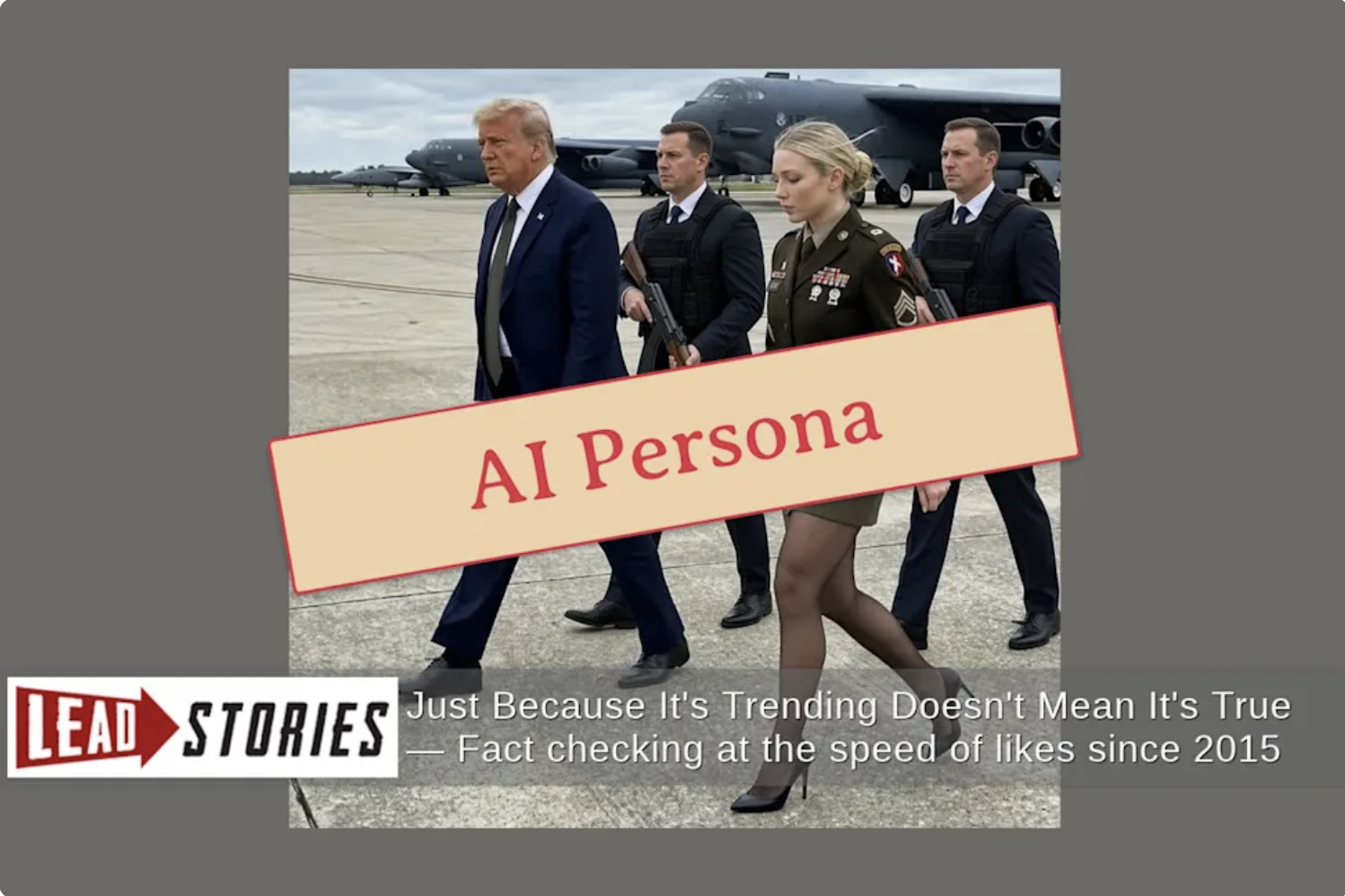
“Anna Blackwell” Posed With Trump’s Entourage on X — She Doesn’t Exist
|
|
https://beehiiv-images-production.s3.amazonaws.com/uploads/asset/file/db1e1090-14f2-4ba8-b545-a7a063dd8741/Anna_Blackwell.png?t=1794253043
On November 1, an X account called @Annablackwe11 posted an AI-generated photo of a woman in a military uniform standing next to President Trump, with the caption: “An honor to stand alongside President Trump!” The account’s bio said “LOvE to be a military,” which is not how anyone in the military talks. Lead Stories found that someone had created the account in July 2026, changed its username seven times, and run it from Nigeria. The two Secret Service agents in the photo look almost identical — same vests, same rifles, same faces — and the woman’s uniform does not match any real Army Green Service Uniform. Lead Stories tied “Blackwell” to the earlier AI persona “Jessica Foster,” an Instagram account with over a million followers that posed as a soldier and OnlyFans creator before Instagram removed it in March 2026.
|
|
|
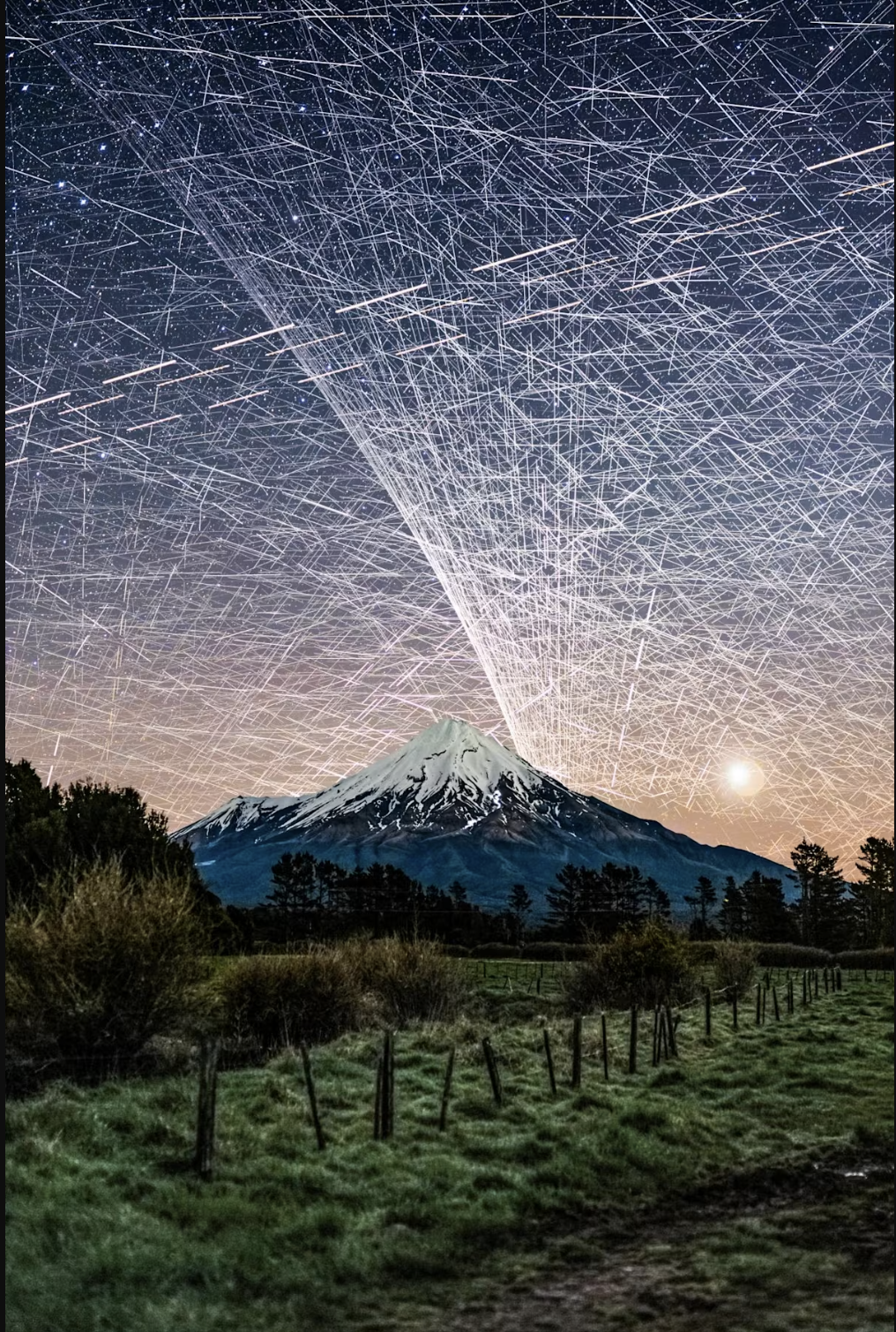
Brendan Larsen’s Real Satellite Photo Over New Zealand Is So Good That People Called It AI
|
|
https://beehiiv-images-production.s3.amazonaws.com/uploads/asset/file/09d72fad-7ffd-4d5f-891c-83ff4ec52c58/Guardian_story.png?t=1794253047
New Zealand astrophotographer Brendan Larsen, 51, spent hours shooting hundreds of photos of the night sky above Mount Taranaki, then stacked and edited them to show roughly 1,400 satellites and 14,000 trails forming a dense crisscross pattern. The image went viral — millions of views — and the comments filled up with people saying it had to be AI. Larsen had expected the accusations and recorded a video of his full editing process as proof. This is the flip side of the AI-fake problem: when enough fakes flood the internet, real photos of real things get dismissed too.
|
|
|
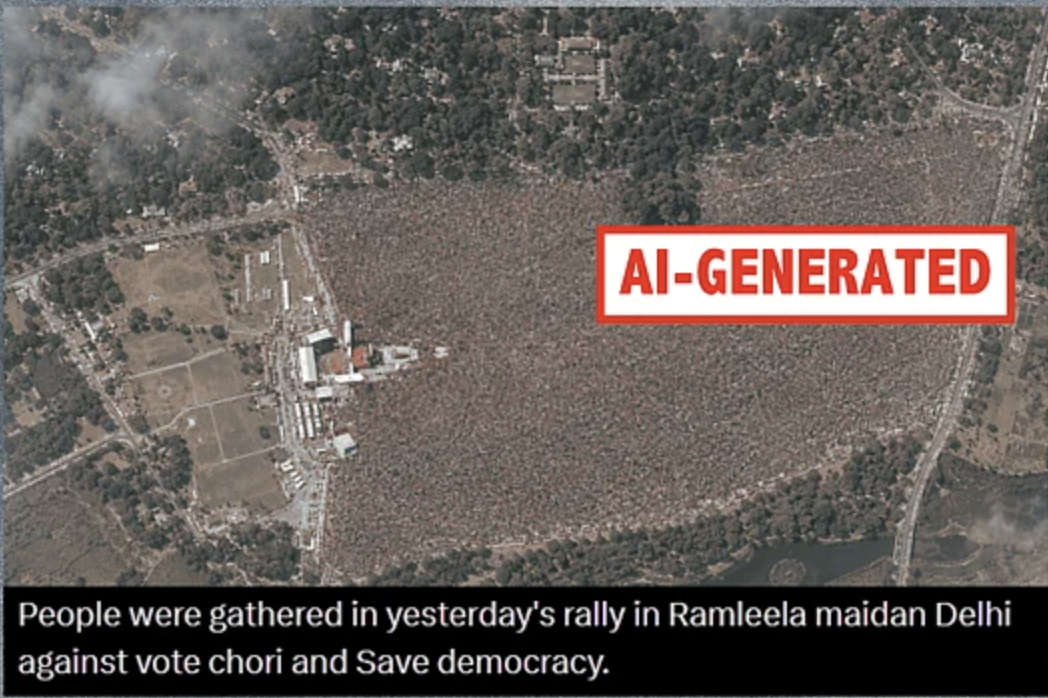
India’s Opposition Shared an AI-Made Crowd Photo to Inflate a Delhi Protest
|
|
https://beehiiv-images-production.s3.amazonaws.com/uploads/asset/file/adbe9e26-1360-4826-b9f3-76f9ed93e7ce/India_opposition_protest.png?t=1794253190
On November 1, India’s opposition INDIA bloc held a rally at Ramlila Maidan in Delhi to protest alleged voting fraud, and backers shared a photo online that showed an enormous crowd filling the grounds. AFP found several red flags in the image — banner text that could not be read, people merging into each other, and other visual errors — and an OpenAI detection tool confirmed that AI had generated it. India’s ruling BJP jumped on it, with Union Minister Kiren Rijiju calling the image “fake AI.” A real rally did happen with real people, but this particular photo was made to make the crowd look bigger than it was.
|
|
YOUR REALITY DETECTOR TOOLKIT |
|
Today’s Skill: Checking Whether a Scary Photo Matches a Real Place
When a photo tries to scare you, check whether the place in the photo matches what you can find out about the real place.
|
|
01
|
Search for the real place
If a photo claims to show a specific building, landmark, or location, search for photos of that same place on a news site or Google Maps and compare what you find to what the viral image shows. The fake Starbucks image fell apart the moment anyone looked up real photos of that cafe, because the view out the window was completely different.
|
|
|
|
02
|
Ask yourself: does this photo make me afraid, and is that the point?
Photos designed to scare you spread faster than photos that just inform you. The Starbucks howitzer image worked because it made a real but distant military situation feel like an immediate personal threat. When a photo hits you in the gut, that is the moment to slow down and check before you share.
|
|
|
|
03
|
Check if any real news outlet covered it
If a photo shows something as dramatic as a gun pointed at civilians in a coffee shop, every major news outlet in the world would cover it. Search for the story on AP, Reuters, BBC, or any news site you trust. The Starbucks image had been online for more than a week before AFP Fact Check published their debunk, and in all that time, not a single legitimate news outlet reported the scene as real.
|
|
|
|
|