TMZ Ran a ‘Shocking Transformation’ Photo of Clay Matthews — It Was AI, and an Undisclosed Ad
|
|
"Fully AI"
Pangram Detector's Verdict
|
#ad
No Sponsor Ever Named
|
|
"Gigaclay"
Matthews' One-Word Response
|
Medium
Fooled Index
|
|
|
|
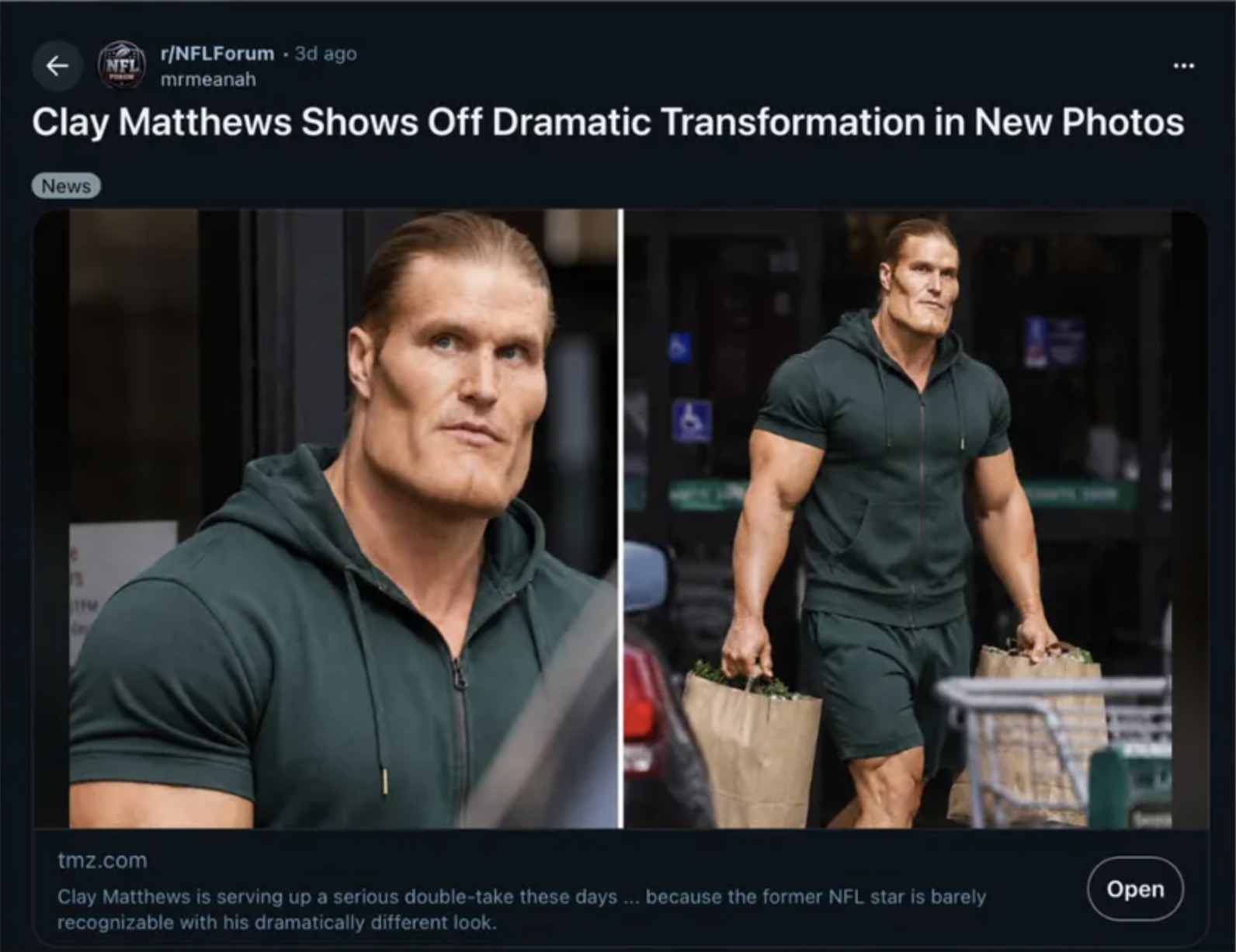
AI-GENERATED — No plastic surgery happened. A detection tool called the photos fully AI.
|
|
On September 4, 2026, TMZ posted photos on X showing what it called Clay Matthews "grabbing groceries looking VERY different after apparently getting some work done," describing it as an "absolutely shocking transformation." The images showed Matthews with an enlarged jaw and chin, bulging, cartoonishly muscular arms and legs, and a face that looked closer to a hyper-stylized video game character than the real former NFL linebacker. The post carried an "#ad" label, but never disclosed who was actually paying for it or what was being promoted.
The images weren't real. An X Community Note was added directly to the post, stating the photos were "AI-generated images falsely depicting Clay Matthews after cosmetic work," and adding that no credible sources had reported any such change. Pangram, a widely respected AI-detection tool, went further and determined that several of the images in TMZ's own gallery were "fully AI." TMZ later reported on September 9 that the images actually came from prosthetics fitted for an ad campaign for a sports betting platform, and that same platform turned out to have sponsored the original TMZ post, though it wasn't possible to independently confirm whether the whole thing was a staged promotional stunt from the start.
Viewers caught the tells fast without needing a detector at all. Matthews' hands looked distorted, and his muscles didn't line up with real human anatomy in a way that felt achievable in any gym. Once the internet started calling the photo "GigaChad," Matthews leaned into the joke himself, responding with a single word: "Gigaclay," turning a misleading, undisclosed AI ad into a meme almost overnight.
|
|
| 🏷️ |
A detector called it “fully AI.” Pangram, a widely trusted AI-detection tool, rated several of the TMZ gallery's images as completely AI-generated.
|
|
|
| 📝 |
X flagged it directly. A Community Note was attached to TMZ's own post, correcting the record and noting no credible sources had reported any real transformation.
|
|
|
| 💪 |
The muscles don't match real anatomy. Viewers spotted distorted hands and an exaggerated, video-game-like jaw and muscle structure that doesn't match how a real human body actually looks.
|
|
|
| ❓ |
Nobody disclosed who paid for it. The post carried an "#ad" label, but TMZ never said what company or product it was actually promoting.
|
|
|
|
🚨 100% AI-Generated
Clay Matthews never got plastic surgery. The dramatic "transformation" photos TMZ shared were AI-generated, tied to an undisclosed ad campaign, and confirmed fake by both a Community Note and a professional AI-detection tool. Even a celebrity news outlet's own post turned out to be exactly the kind of content this newsletter exists to catch.
|
|
|
|
Taylor Swift Is the Most Impersonated Celebrity in AI Scam Ads — Again
|
|
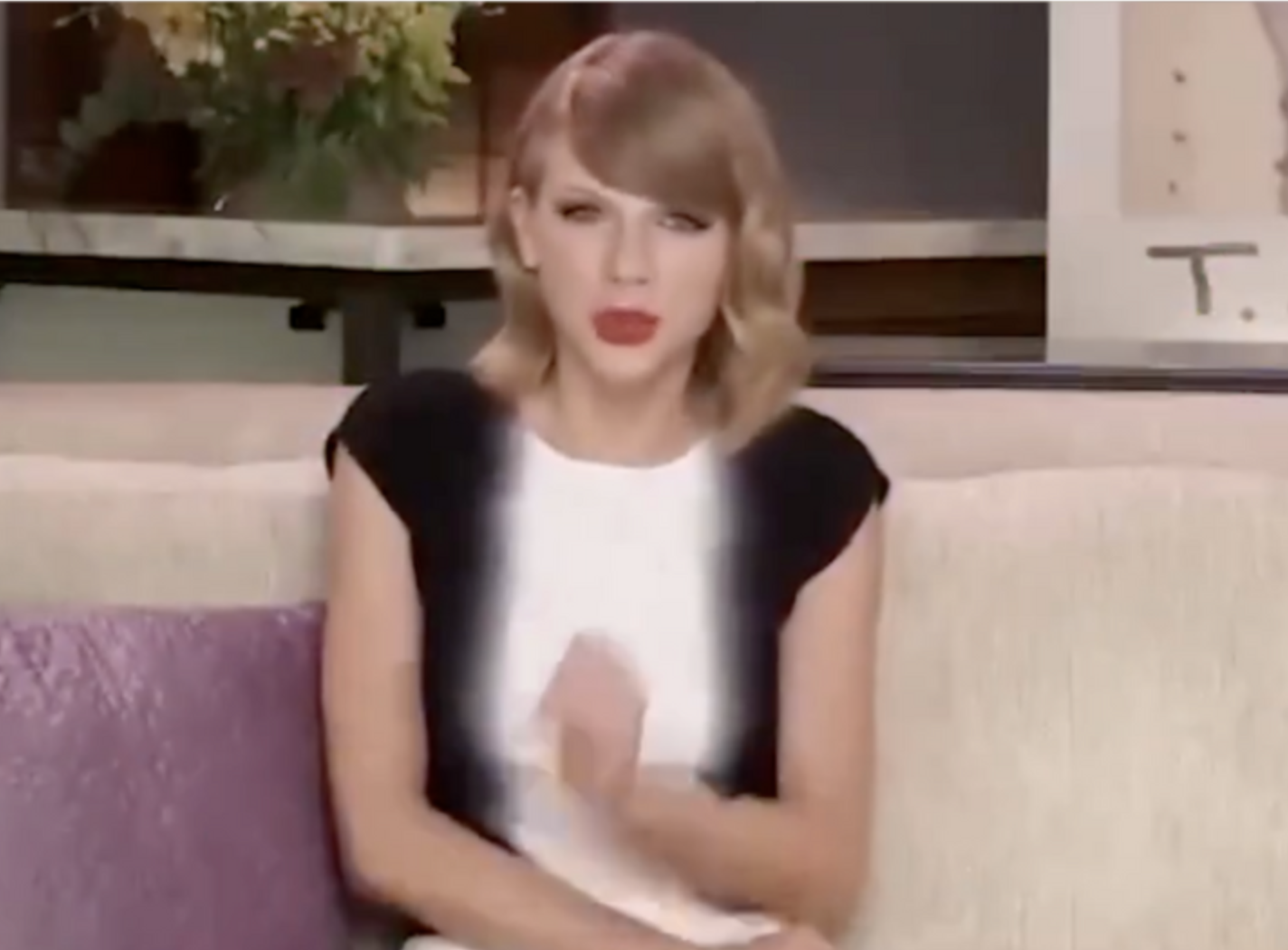
A new report from cybersecurity firm McAfee found that 72% of Americans have now seen a fake or AI-generated celebrity endorsement online, and for the second year running, Taylor Swift topped the list of the most exploited celebrity likenesses in online scams. Scammers use AI to clone her face and voice for fake giveaways, product endorsements, and investment schemes designed to trick fans into clicking, buying, or handing over personal information. McAfee also released its first ranking of impersonated online creators, naming streaming personality Pokimane the most deepfaked influencer globally. The report's core message is straightforward: a familiar, trusted face is exactly why scammers pick it, not proof that an endorsement is real.
|
|
YOUR REALITY DETECTOR TOOLKIT |
|
Today’s Skill: Check for an Ad With No Advertiser Named
A vague sponsorship label is often the first, quietest clue something isn't what it seems.
|
|
01
|
Check for an ‘#ad’ with no actual advertiser named
TMZ's post was labeled an ad but never said who paid for it or what was being sold. A vague sponsorship label with no named brand is worth extra scrutiny.
|
|
|
|
02
|
Look at the hands and the jawline first
Viewers spotted Matthews' distorted hands and an unrealistically sculpted jaw before any tool confirmed it was fake. Hands and facial structure are still where AI tends to slip up.
|
|
|
|
03
|
Remember even trusted outlets can share AI content
A well-known celebrity news outlet posted the fake images itself. A recognizable, credible-seeming source sharing something doesn't automatically make the content real.
|
|
|
|
|


