|
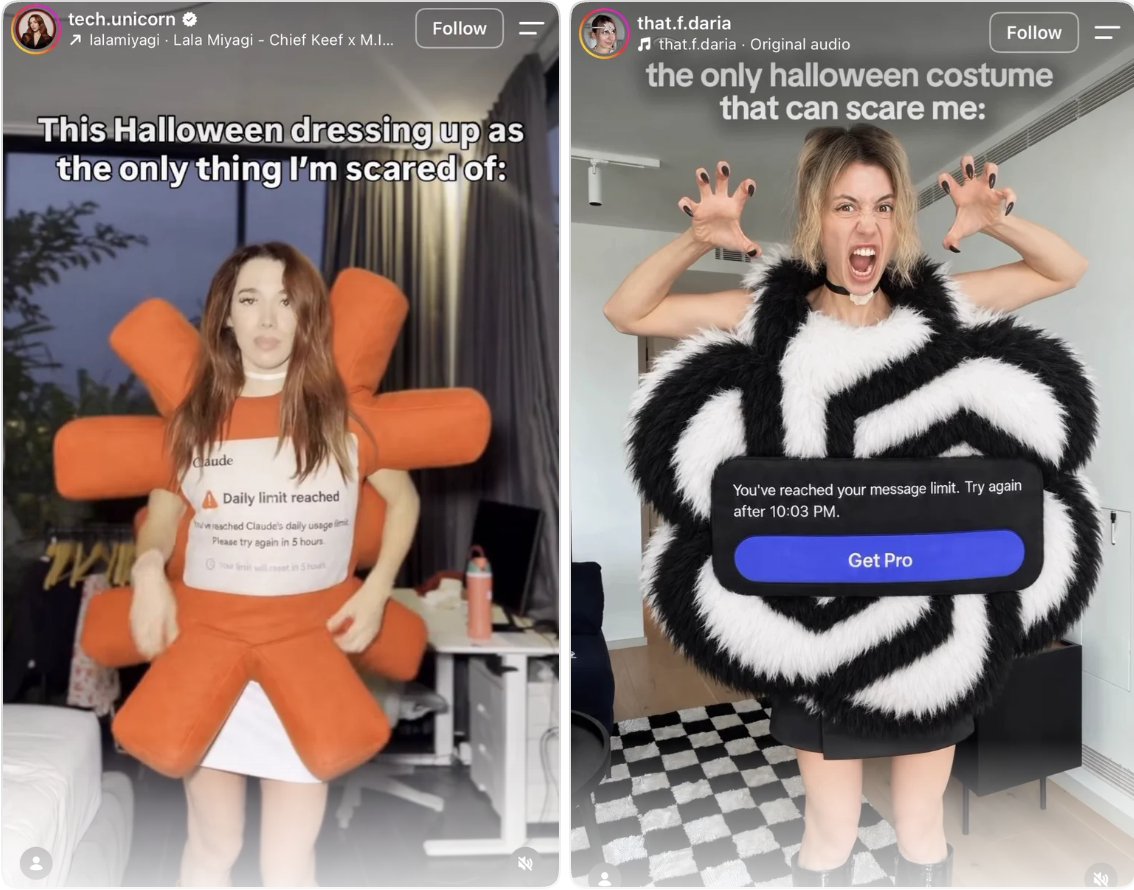
A creator named Daria, who posts on Instagram as @that.f.daria, went viral this month with AI-generated costume ideas. The best known is what she called “the only Halloween costume that actually scares me”: a person dressed as an AI chatbot’s usage limit. A short AI-generated clip of her wearing it collected about two million views on Instagram, and commenters asked where they could buy one. She followed it with a second AI clip, a chatbot logo with a “limit reached” message across the front.
The costume did not exist. Daria had made it with AI, so she decided to build a real one, drafting a pattern and stuffing orange fabric with foam. Then she posted that a website had started selling the costume for $109.99. Fast Company described the seller as a so-called “scammer” who had apparently taken her photos. Daria said the site was using screenshots of her and AI-generated images of “her,” and that she was happy to inspire people but less happy to be “the unpaid face of someone else’s scam.”
A viral clip can make a product feel real before anyone has made it. A seller can grab the images, add a price and a “limited edition” label, and wait for orders. Other creators had also made their own AI versions of the costume, which makes it even harder to tell who made the original.
The flip side is just as strange. Spirit Halloween sells costumes based on AI-generated internet characters known as “Italian brainrot,” including Tung Tung Tung Sahur, a wooden drum with arms that wields a baseball bat, and Ballerina Cappuccina, a ballerina with a cappuccino for a head. Reddit users who said they work at Spirit Halloween confirmed some sales, and the $44.99 Tung Tung Tung Sahur costume was sold out online in all but one size.
|