No One Filmed the Banana Farm Attack Near Nablus. Nine Days Later, AI Made the Footage.
|
|
1.5M+
Views across platforms
|
5+
Countries reached
|
|
6 Days
To debunk
|
High
Fooled Index
|
|
|
Palestinian media reported on November 4 and 7 that Israeli “hilltop youth” had stolen banana crops and damaged irrigation equipment at a plantation near Nablus in the West Bank. The reports had no photos and no video — just the claims.
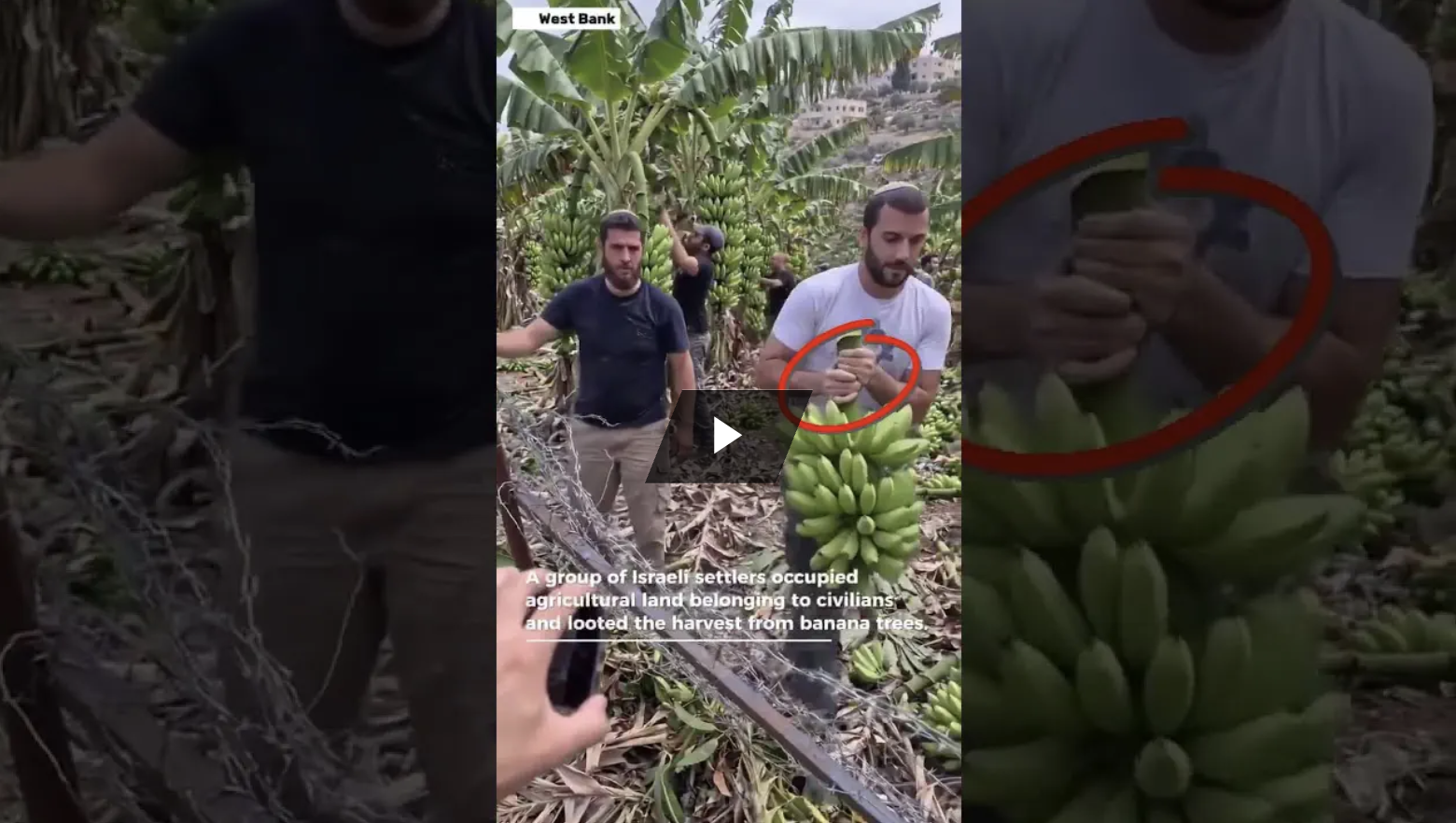
Then on November 16, a video appeared on X. It showed young men yanking bananas off trees and stomping on irrigation pipes at what looked like a farm, and the caption accused Israeli settlers of the damage. Within a day, the video had more than 1.5 million views across platforms. Accounts in the United States, Brazil, Turkey, Qatar, and Pakistan all reposted it, and many of them used the exact same caption, copied word for word. One of the accounts that shared it had about 774,000 followers.
Israel’s Ministry of Diaspora Affairs and Combating Antisemitism investigated the video and ran it through detection tools. The tools found that farming tools in the video changed shape between frames, and the hands and faces of the figures had distortions you don’t see in real footage. The ministry confirmed that someone made the whole video with AI — not a camera.
This isn’t the first time it happened in the region. In October, a different AI video showed what looked like olive trees being uprooted in the West Bank. France 24 investigated and found that someone made that video with Google’s Gemini AI tool and hid the Gemini watermark behind a “like” sticker. The pattern is the same both times: a real claim, no real footage, and an AI tool that creates the missing “proof.”
|
|
| ✋ |
Distorted hands and faces. The figures in the video had hands and faces that shifted between frames in ways real people don’t move, and AI detection tools flagged these as clear signs of computer-made content.
|
|
|
| 🔧 |
Shape-shifting tools. The farming tools the figures held changed shape from one frame to the next — a handle would warp, a blade would bend — but each single frame looked close enough to real that most viewers scrolled right past it.
|
|
|
| 🤖 |
Suspected bot network. The ministry found that some of the accounts spreading the video were likely bots, and many reposted the exact same caption in different countries and languages without changing a word.
|
|
|
| 📰 |
No original footage exists. Palestinian media reported the crop damage on November 4 and 7, but no outlet had any video or photos of the events. The AI video appeared nine days after the last report, and no journalist or witness had shot anything like it.
|
|
|
|
🚨 100% AI-Generated
Someone took a real claim — crop theft reported by Palestinian media — and made a fake video to match it. No news outlet had footage of the events because no one filmed them. So someone typed a description into an AI tool, created the missing “proof,” and 1.5 million people watched it before Israel’s Ministry of Diaspora Affairs confirmed it was fake.
|
|
|
|
“Sueta” Faked the Crimean Bridge Collapse Three Times in One Week
|
|
https://beehiiv-images-production.s3.amazonaws.com/uploads/asset/file/1dccf33c-7fee-4cd3-a823-bf6bd663b399/Kerch_Strait_Bridge_.png?t=1795521472
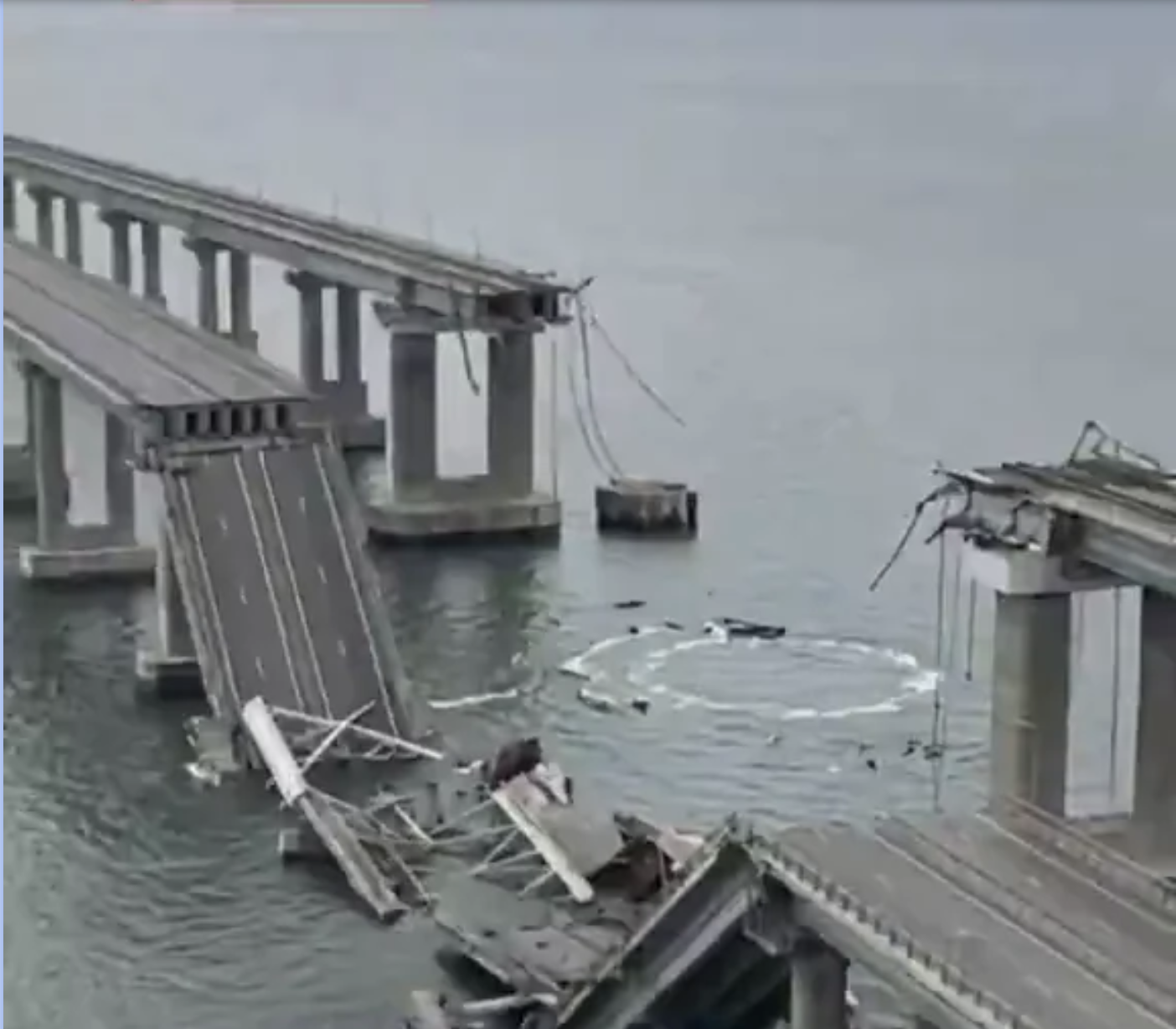
Two accounts — @suetanews on Instagram and @Sueta_inc on X — posted at least three AI-generated videos between November 16 and 19 that showed the Kerch Strait Bridge collapsing from Ukrainian attacks, and the November 19 video came with a small-text label in Ukrainian that said “illustrative footage.” SynthID, a detection tool, confirmed that Google AI made the videos. Ukraine did hit the bridge three times that week, and satellite photos showed a real section of the vehicle traffic side had collapsed into the water — but the AI videos showed different damage that didn’t match any of it, and the accounts kept posting new fake versions each time an attack made the news.
|
|
|
Paris Hilton Told Congress That 100,000 Deepfakes of Her Exist Online
|
|
https://beehiiv-images-production.s3.amazonaws.com/uploads/asset/file/ebd9359b-f1f0-401e-b464-b5bb9d27801f/Paris_Hilton.png?t=1795521476
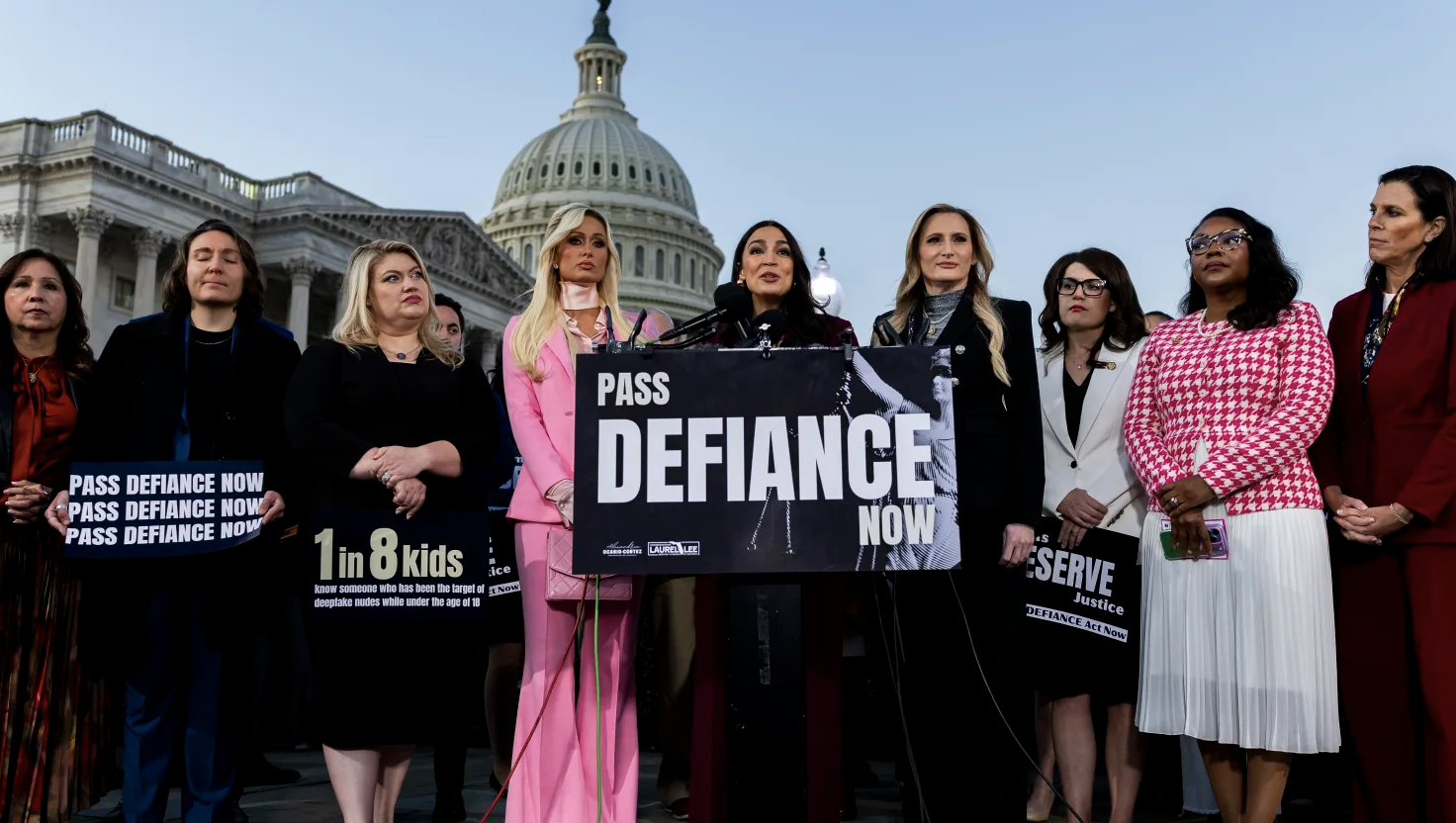
Paris Hilton stood outside the U.S. Capitol on November 17 with Rep. Alexandria Ocasio-Cortez and Rep. Laurel Lee and said that strangers had made more than 100,000 sexually explicit AI deepfakes of her, and that most women who get targeted this way don’t have the money or the lawyers to fight back. They are pushing the DEFIANCE Act, which the Senate passed in January 2026 but the House has never voted on — the bill would let victims of AI-generated explicit images sue the people who make and share them.
|
|
YOUR REALITY DETECTOR TOOLKIT |
|
Today’s Skill: Real Story, Fake Proof
If the news story is real, a fake video of it is much harder to spot — here’s how to catch it anyway.
|
|
01
|
Watch It Twice
The first time you watch a video, you follow the story. The second time, look at the small stuff — hands, fingers, whatever people are holding. In the banana plantation video, the farming tools changed shape between frames, and the figures’ hands had strange bends and shifts. A second watch with your eyes on the details, not the drama, can save you from sharing a fake.
|
|
|
|
02
|
Check the Gap
Palestinian media reported the crop damage on November 4 and 7, but no video appeared until November 16 — nine days later, from an anonymous account on X. If news outlets cover a big event but show no photos or video, and then a clip shows up days later from a stranger, that gap between the report and the “proof” is a warning sign.
|
|
|
|
03
|
Ask Who Filmed It
This video showed what looked like a crime in progress, shot from a close and steady angle, but nobody ever identified the person behind the camera. If you can’t figure out who filmed it, when they filmed it, or how they got that angle, the video might not come from a real camera at all.
|
|
|
|
|